
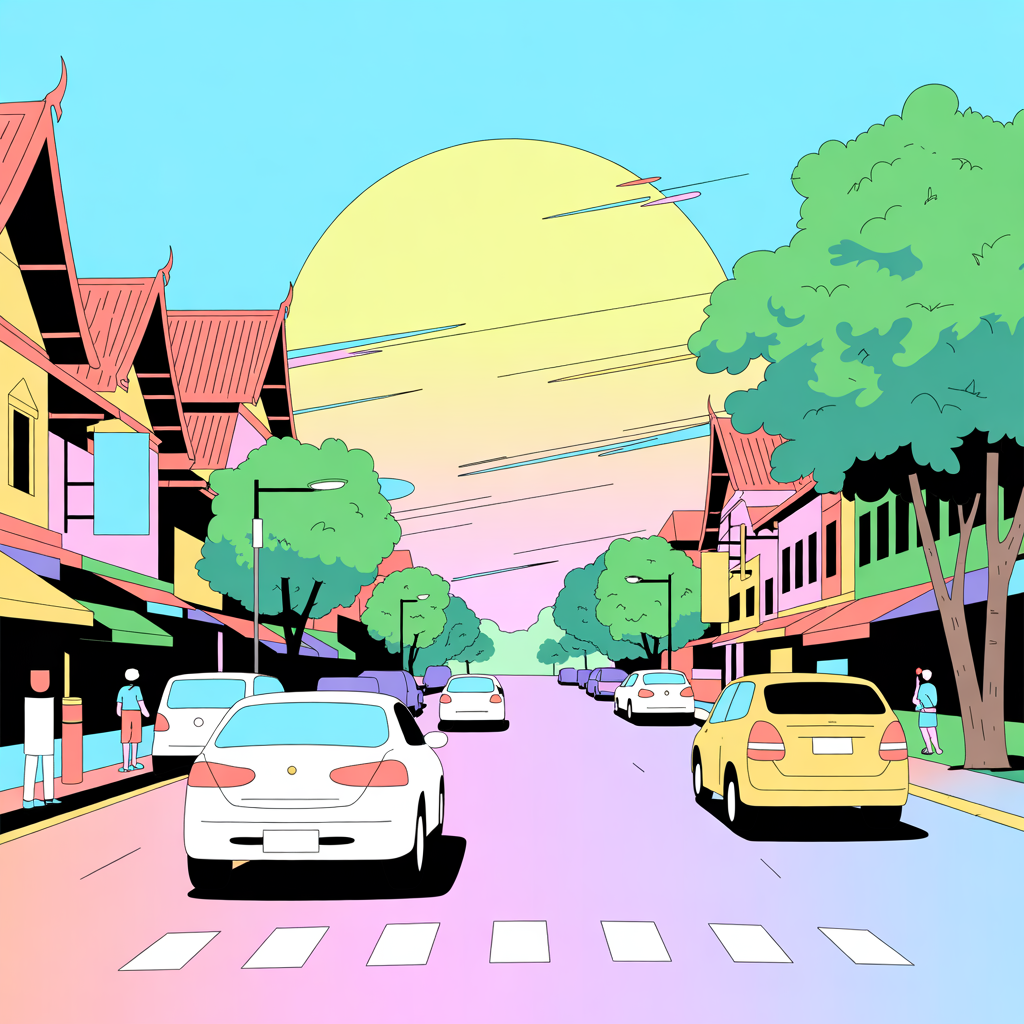
The Thrills
Food
- Street food is cheap, consistent, and ritual-friendly. Pork skewers at the same cart every morning, pad krapow from a stall that doesn’t change its seasoning, khao soi that hits the same dopamine spot every time. Prices: 40–80 baht ($1–$2).
- Cafés are everywhere. Many double as air-conditioned sensory refuges. A latte is ~70 baht, avocado toast ~180 baht. Western food is available, but it’s pricier and inconsistent.
Housing
- You can rent a clean studio with AC for 6,000–10,000 baht/month ($160–$270). For 15,000–20,000 baht you can get a one-bedroom with pool and gym. Predictable environments mean you can construct a private bubble.
- Condos in Nimmanhaemin are loud but close to cafés. Riverside and Santitham are quieter.
Infrastructure
- Hospitals: clean, professional, fast. Walk in, register, see a doctor in under an hour. Consultation: 700–1,200 baht ($20–$35). Medication dispensed on site. Compared to the U.S., this feels like science fiction.
- Internet: cheap, reliable. 300 Mbps for under $20/month. Essential for autistic people who live online.
Social Shield
- Being a foreigner is camouflage. Your quirks get read as “farang behavior,” not pathology. No one demands eye contact. No one comments if you eat alone every day at the same stall.
- Thai indirectness can be a relief. Politeness is the default setting. Meltdowns are not socially punished the way they might be back home—they’re mostly ignored.
The Evils
Sensory Hell
- Scooters: Constant engine noise, unpredictable honks, exhaust blasts. Crosswalks are decorative.
- Markets: Fluorescent lights, frying oil smoke, bargaining voices layered with blaring Thai pop. Even short trips can torch your bandwidth.
- Burning season (Feb–Apr): AQI hits 300–500. The air tastes metallic, your throat burns, your head pounds. Without an air purifier, it’s unlivable. Some expats flee to the south.
Bureaucracy
- Immigration: mandatory visa runs, extensions, 90-day check-ins. Offices are fluorescent, crowded, and run on opaque rules. One missing photocopy can undo an entire morning. Staff are polite but immovable. Expect meltdowns if you go in unprepared.
- Bank accounts: possible but inconsistent. Some branches demand work permits. Others let you open with just a passport. Logic doesn’t apply.
Social Minefields
- Asking “why” too much confuses locals. Thai social order is hierarchical and implied, not explained.
- Saying “no” directly can offend. The polite “we’ll see” may mean “absolutely not,” but you won’t know until the moment passes.
- Expat circles can be hostile. Digital nomads brag about productivity hacks, retirees complain about Thailand not being like home, wellness influencers sell detox retreats. None of it is built for neurodivergent honesty.
Isolation
- Friendships rotate. People come for a month, six months, a year—then vanish. You rebuild from scratch.
- There are autistic people in Chiang Mai, but there’s no visible community. You either mask into the general expat pool or accept solitude.
Coping Systems
- Pick a safe neighborhood: Quiet condo > guesthouse > downtown hotel.
- Invest in hardware: Air purifier, blackout curtains, noise-canceling headphones.
- Script routines: Learn polite Thai refusals, set meal rotations, identify fallback cafés.
- Pre-game bureaucracy: Bring every document in triplicate. Carry your own pen. Expect errors.
- Exit plan: Always know the nearest refuge when sensory overload spikes—mall, café, temple, or your condo.
Bottom Line
Chiang Mai offers cheap stability, social invisibility, and the ability to build a controlled sensory bubble. The cost is bureaucracy, unpredictable air, and a revolving-door social scene. Thrill: a pad krapow cooked the same every day, air-conditioned cafés as sanctuaries, hospitals that actually function. Evil: scooters cutting across crosswalks, burning season haze, expat circles that vanish overnight.
For an autistic person, it’s not paradise. But compared to the United States—where you’re under constant scrutiny—it can feel like being left alone to finally breathe.